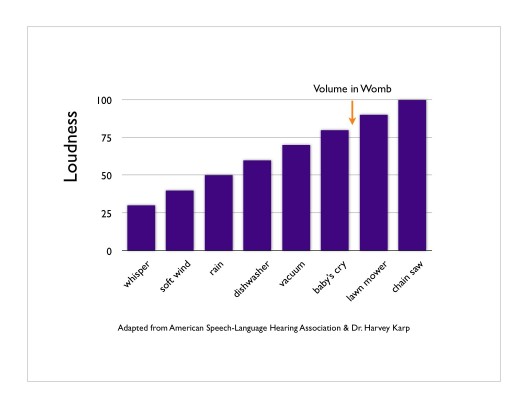
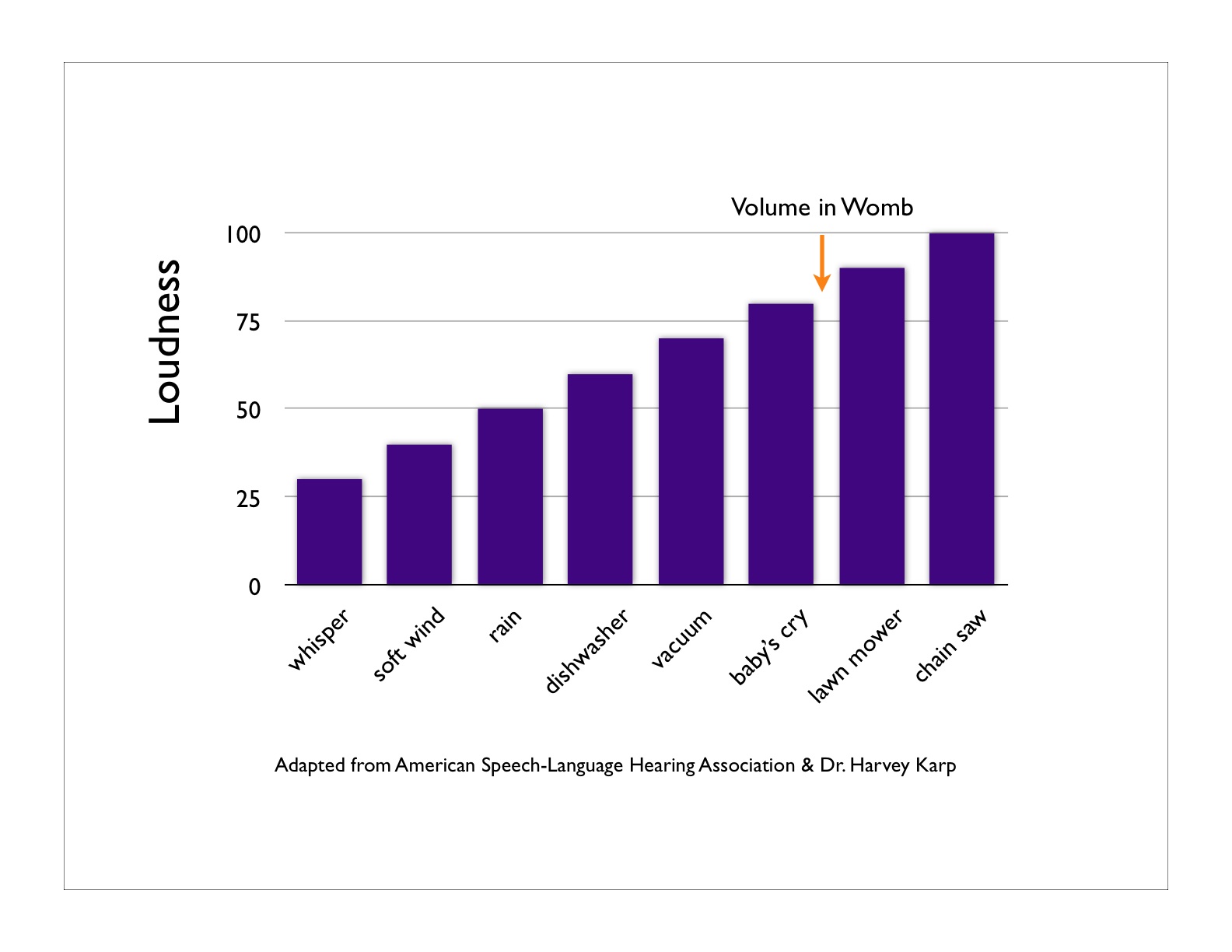
Baby Sleep White Noise
It helps parents too, when all sleep in the same room: healthy sleeping newborns can be pretty noisy as they move and make noises while they sleep. |

It helps parents too, when all sleep in the same room: healthy sleeping newborns can be pretty noisy as they move and make noises while they sleep. |


With daily distractions and technological overstimulation, our need for sleep and personal well-being is more necessary than ever.
White noise is rapidly becoming a popular way to help the body and brain relax for a good night's sleep. Here are six ways your sleep benefits from white noise: |
Sound Therapy was common in the world of the Ancient Greeks. Pythagoreans used mathematical techniques to create harmonic structures for emotional balance, spiritual and relationship healing, and overall health. |
The idea that you should listen to music while meditating is very common. This probably comes from the fact that many alternative health practitioners play relaxing music in the background, whereas there would simply be silence or ambient background noise to |
Sound affects many areas of the brain and has an undeniable effect on the body. A good way to test if a particular sound is relaxing to you is to check your pulse: if it slows down, then you have found the sound that is calming you. |
White Noise is created by a continuum of frequencies equally distributed over the whole hearing range. In healthcare applications, white noise is used to treat hyperacusis, an increased sensitivity to normal environmental sounds, or to camouflage the annoyance caused by tinnitus, a ringing in the ear occurring without any stimulus. White noise is also used to mask background noises in the office, or to aid in sleep.
 |
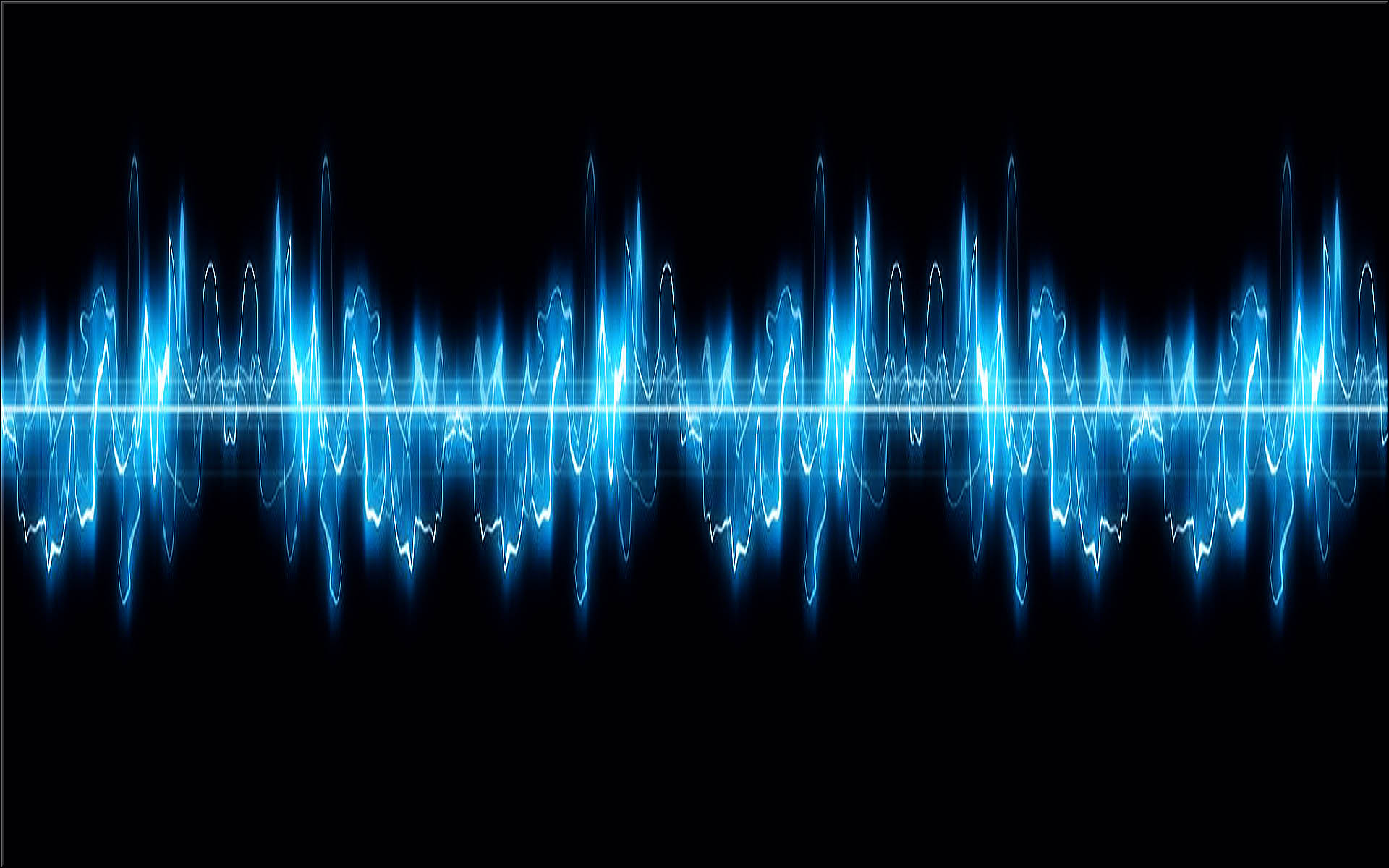
In signal processing, white noise is a random signal having equal intensity at different frequencies, giving it a constant power spectral density. The term is used, with this or similar meanings, in many scientific and technical disciplines, including physics, acoustic engineering, telecommunications, statistical forecasting, and many more. White noise refers to a statistical model for signals and signal sources, rather than to any specific signal.

In discrete time, white noise is a discrete signal whose samples are regarded as a sequence of serially uncorrelated random variables with zero mean and finite variance; a single realization of white noise is a random shock. Depending on the context, one may also require that the samples be independent and have identical probability distribution (in other words i.i.d. is a simplest representative of the white noise). In particular, if each sample has a normal distribution with zero mean, the signal is said to be Gaussian white noise.
|
Learn More “Sound therapy” is a broad term that may be used in many ways, depending on the specific product, clinical setting, or individual clinician. In general, sound therapy means the use of external noise in order to alter a patient’s perception of, or reaction to, tinnitus. Like other tinnitus treatments, sound therapies do not cure the condition, but they may significantly lower the perceived burden and intensity of tinnitus. Sound-based therapies function on four general mechanisms of action. (Mechanisms of action are the putative processes, or reasons why, a given intervention is effective.) Different products may emphasize a specific aspect, or include a combination of approaches: Masking: exposing the patient to an external noise at a loud enough volume that it partially or completely covers the sound of their tinnitus Distraction: using external sound to divert a patient’s attention from the sound of tinnitus Habituation: helping the patient’s brain reclassify tinnitus as an unimportant sound that should can be consciously ignored Neuromodulation: the use of specialized sound to minimize the neural hyperactivity thought to be the underlying cause of tinnitus There are many devices that offer different levels of sound therapy. Below is a list of general types of sound therapy products, and a discussion of their specific mechanisms of action and reported efficacy. Sound Masking Devices These are devices or applications that provide generic background noise — often white noise, pink noise, nature sounds or other ambient, subtle sounds. The noise generated by sound machines can partially or fully mask a patient’s perception of tinnitus, providing relaxation and temporary respite from the condition. The “traditional” sound masker is a single-function table-top or bedside device with several pre-set sound options. However, almost any sound-producing device can be used for masking purposes, including personal media players, computers, radios, and TV. Even electric fans or table fountains can provide masking sounds. In general the most effective masking sounds are those that elicit positive emotional responses in the patient. Sound masking devices are typically only effective during or immediately after active use; they have very limited longer-term effectiveness in reducing overall perception of tinnitus. Hearing Aids Hearing aids can be classified as a type of sound therapy because they augment external noise as a way of increasing auditory stimuli and diverting attention from the perception of tinnitus. A comprehensive review of hearing aids as a tinnitus management tool is available here. Modified-Sound / Notched-Music Devices While commercial-grade sound machines deliver a generic sound selection, a variety of medical-grade devices provide more customized sounds designed around the patient and his/her tinnitus. These devices play special notched-music or algorithmically-modified sounds in which specific frequencies and tones are emphasized — often at a level not consciously perceivable by the listener. The reported function of these modified sounds varies according to the specific product: Neuromonics: customized sounds that remove low-end frequency bias, gradually exposing patients to their tinnitus in a controlled manner that supports habituation SoundCure: customized sounds matched to the patient’s tinnitus to provide cortical stimulation and partial residual inhibition of tinnitus Otoharmonics: sounds matched to the patient’s tinnitus are played back while the subject sleeps, helping to support habituation. Acoustic CR Neuromodulation: Sequences of tones, presented at low volume for long periods of time, trigger activity in the brain that counters neural hyperactivity. Unlike standard white noise machines, notched-music devices are generally worn intermittently (only during defined therapy sessions or times of predictable acute need, such as before bed or immediately upon waking), and provide lingering benefit after the device is turned off. Also, unlike standard white noise machines, notched-music and modified sound devices may, over time, alleviate the perceived burden of tinnitus — even after they are turned off. By facilitating habituation these products may help the patient naturally “tune out” the perception of tinnitus. The reported clinical efficacy of modified-sound and notched-music devices varies by product, but in general these devices appear to provide some level of relief to many patients. Optimal results typically require at least some patient counseling and education in addition to the use of sound devices. Combination Devices Many hearing aids now come with integrated sound generation technology that delivers white noise or customized sounds to the patient on an ongoing basis. These devices combine the benefits of a hearing aid with those of other sound therapies, and are particularly well suited for tinnitus patients with measurable hearing loss. Also, because of the portable nature of these devices they can provide semi-continuous use and more consistent benefit throughout the day. The efficacy of these combination devices varies, depending on the device, the integrated sound feature, and the particular patient. And, although research data is not definitive, the professional consensus seems to be that hearing aids with integrated sound generators benefit a significant number of patients. Considerations Price: Hearing aids and medical-grade sound therapy devices can be expensive and are often not covered by insurance plans. Tinnitus Symptoms: Patients should consider their lifestyles and the times when they most require relief from their tinnitus. If tinnitus is mostly an issue immediately before or during sleep, a bedside white noise machine may be sufficient; if tinnitus is an ongoing, 24/7 concern, a more portable option may be preferable. Sound Sensitivity: Patients with hyperacusis or another form of sound sensitivity may encounter some discomfort when using sound amplifying devices. Education and Support: Nearly all sound therapy systems work best when they are coupled with a program of supplemental patient education and counseling. References Hoare, D.J., Searchfield, G.D., Refaie, A.E. and Henry, J. (2014) “Sound Therapy for Tinnitus Management: Practicable Options.” Journal of the American Academy of Audiology. 25: 62-75. Hobson, J., Chisholm, E., El Refaie, A. (2012) “Sound Therapy (Masking) in the Management of Tinnitus in Adults.” Cochrane Database of Systematic Reviews, Issue 11. Art. No.: CD006371. DOI: 10.1002/14651858.CD006371.pub3. |
Music
White noise is commonly used in the production of electronic music, usually either directly or as an input for a filter to create other types of noise signal. It is used extensively in audio synthesis, typically to recreate percussive instruments such as cymbals or snare drums which have high noise content in their frequency domain.
Electronics engineering
White noise is also used to obtain the impulse response of an electrical circuit, in particular of amplifiers and other audio equipment. It is not used for testing loudspeakers as its spectrum contains too great an amount of high frequency content. Pink noise, which differs from white noise in that it has equal energy in each octave, is used for testing transducers such as loudspeakers and microphones.
Acoustics
To set up the equalization for a concert or other performance in a venue, a short burst of white or pink noise is sent through the PA system and monitored from various points in the venue so that the engineer can tell if the acoustics of the building naturally boost or cut any frequencies. The engineer can then adjust the overall equalization to ensure a balanced mix.

Computing
White noise is used as the basis of some random number generators. For example, Random.org uses a system of atmospheric antennae to generate random digit patterns from white noise.

Tinnitus treatment
White noise is a common synthetic noise source used for sound masking by a tinnitus masker. White noise machines and other white noise sources are sold as privacy enhancers and sleep aids and to mask tinnitus. Alternatively, the use of an FM radio tuned to unused frequencies ("static") is a simpler and more cost-effective source of white noise. However, white noise generated from a common commercial radio receiver tuned to an unused frequency is extremely vulnerable to being contaminated with spurious signals, such as adjacent radio stations, harmonics from non-adjacent radio stations, electrical equipment in the vicinity of the receiving antenna causing interference, or even atmospheric events such as solar flares and especially lightning.

Work environment
The effects of white noise upon cognitive function are mixed. Recently, a small study found that white noise background stimulation improves cognitive functioning among secondary students with attention deficit hyperactivity disorder (ADHD), while decreasing performance of non-ADHD students. Other work indicates it is effective in improving the mood and performance of workers by masking background office noise, but decreases cognitive performance in complex card sorting tasks.
 |
Even if you consistently fall asleep each night to the soothing sounds of a South American rainforest or a raging thunderstorm, you might not know why your white noise machine works for you. Is there a scientific reason artificial soft sounds can lull us to sleep? Or is white noise like an aural placebo, providing rest and relaxation just because we're convinced it's relaxing?
It turns out there is a reason that white noise machines can help you fall asleep, and stay asleep. And it's not just because they mask other noises.
In a story for Spirit Magazine, one neurologist explains what goes on in your brain that makes white noise machines invaluable to a sound night of sleep:
Dr. Ralph Pascualy is the medical director of Northwest Hospital Sleep Center in Seattle. He explained to me that the brain naturally craves sensory input. That's why people in sensory depravation tanks hallucinate; robbed of any stimulus, the brain creates its own. During sleep in a quiet night, any random noise, whether a passing truck or a creaking floorboard, is likely to activate the restless brain, waking you up. Constant white noise, he told me, "gives the brain a tonic signal that dampens its own internal systems."
Of course, the "constant white noise" that Dr. Pascualy mentions doesn't necessarily have to come from a bedside sound machine. As our own Beth Ziegler points out in her post Sounds to Help You Fall Asleep, the whir of a fan or purr of a pet cat works just as well to tune out your brain's systems.

It's not beautiful to look at, but the white noise producing Dohm-DS Dual Speed Sound Conditioner by Marpac has over 2,200 reviews on Amazon, with 1,900 of them 4-5 star ratings. And the machine can be used to not only mask distracting noise at night, but also ambient noise during the day.
What do you listen to as you fall asleep? Do you get help from tech like a white noise machine or soft music?
|

This article will look into all of these questions and more to help you understand the origins and uses for this seemingly annoying sound.
A sound you usually hear when you don’t have reception on your television, or there’s no signal on your radio. A sound you would normally try to get rid of as quickly as possible.
So why is that some people actively seek out the best quality white noise? And why is there a whole industry built around white noise machines?
To understand why people would want to listen to it, let’s first take a look at exactly what white noise is. |